If you’re reading this art investment guide, you’re probably balancing two goals: collecting works you truly love and making decisions that still feel intelligent years from now. That tension is healthy. In contemporary art, aesthetics and finance overlap, but they are never identical. The point of this art investment guide is to help you buy with both pleasure and discipline.
In 2026, the market rewards selectivity. This art investment guide is designed for that reality. “Fast” narratives have cooled, and buyers are spending more time on due diligence, price justification, and career signals. That is good news for serious collectors: a stricter environment reduces noise, exposes weak pricing structures, and highlights artists with durable practices—especially mid-career painters with compounding credibility.
This guide is not financial advice. Taxes, export rules, and resale regulations vary by country. Use the framework, adapt it to your situation, and keep your documentation as carefully as you keep your artworks.
Executive summary: the 7 decisions that shape outcomes
Set a horizon (a multi-year hold is realistic).
Choose your mix: emerging vs mid-career vs established (core + satellite).
Buy the best work you can from a coherent series (quality beats quantity).
Evaluate representation and pricing discipline (galleries are market engines).
Plan liquidity early (resale is a process, not a button).
Avoid leverage until you understand worst-case scenarios.
Why contemporary art is an alternative asset
Calling art an “alternative asset” usually means three things: (1) prices don’t move in lockstep with equities, (2) value is shaped by scarcity and cultural capital rather than cash flow, and (3) ownership provides non-financial utility—identity, patronage, access, legacy.
The downside is that art is not a transparent market. Many sales are private. Comparable works can be rare. Condition and provenance can shift value dramatically. Liquidity is uneven even for respected names. A credible investment approach treats these frictions as normal, not exceptional.
What changes the calculus in 2026 is buyer behavior. Collectors are asking harder questions about price ladders, pushing back on unexplained jumps, and prioritizing durable signals: coherent bodies of work, stable representation, and curatorial or institutional context. In other words, the market is more “evidence-based” than it was a few years ago.
Practical implication: you can’t control market cycles, but you can control entry quality, documentation, and your tolerance for illiquidity. That is where returns—cultural and financial—tend to be protected.
What “performance” means (and what to benchmark)
A frequent mistake is to benchmark art against liquid markets as if you could rebalance weekly. You can’t. In this art investment guide, “performance” is measured by (a) the strength of the work’s context over time, (b) the stability of the artist’s market, and (c) your ability to exit without distress. For many collectors, avoiding major drawdowns and preserving optionality is more realistic than chasing spectacular gains.
To benchmark sensibly, compare like with like: similar artists, similar periods, similar mediums, similar sizes, and similar quality within a series. Also account for friction: resale fees, shipping, insurance, and the time it takes to find the right buyer. If you use this art investment guide mindset, you’ll stop asking “Will this double?” and start asking “Will this remain desirable, documented, and defensible through a cycle?”
Emerging vs mid-career artists: ROI comparison
Before comparing segments, define “ROI” properly. Art ROI isn’t only resale price minus purchase price. It includes holding costs (insurance, framing, storage), transaction costs (shipping, taxes, resale fees), and time costs (months or years to place a work). A serious collector therefore tracks two returns: cultural ROI (how much the work matters to you) and financial resilience (how well value may hold or grow through cycles).
Emerging artists: upside, but higher fragility
Emerging artists offer discovery, lower entry points, and the satisfaction of supporting a new voice early. Sometimes, careers accelerate quickly. More often, they plateau. Resale demand can be thin, and a market built mainly on social momentum can reverse fast.
Emerging due diligence checklist
Practice depth: does the work hold up beyond one “great image”?
Sizing rule: treat emerging purchases as higher-risk allocations unless you have exceptional access and research bandwidth.
Signs an emerging market is overheating
This guide is pro-discovery, but it is also pro-discipline. In this art investment guide, overheating often shows up as: rapid price jumps across one season, collectors buying multiple works “just in case,” vague explanations for why prices changed, and inconsistent offers across different channels. Another signal is a sudden flood of similar works on the market (or a rush of “available” pieces that were supposedly sold out).
If you still love the work, the conservative move is not to walk away—it’s to size the purchase smaller, insist on paperwork, and prioritize the best example you can afford rather than multiple average ones. That is the art investment guide way to keep enthusiasm without becoming exit liquidity.
Mid-career artists: why the “risk-adjusted” case is strong in 2026
Mid-career is not about age; it’s about evidence. Mid-career artists have enough history to evaluate (exhibitions, series development, collector base), yet remain accessible compared to blue-chip levels. For many HNWI beginners, this segment is where collecting becomes both intellectually satisfying and structurally defensible.
This is why a modern art investment guide spends so much time on mid-career: there are more data points to judge, and the buyer pool is often broader, which supports liquidity.
Mid-career painters value appreciation trends: what tends to compound
Healthy appreciation patterns for mid-career painters often follow five drivers:
Institutional context: museum acquisitions, public collections, curated programs.
Representation stability: consistent galleries supporting pacing and pricing.
Series coherence: bodies of work that create comparability and confidence.
Collector depth: repeat buyers across regions, not a single micro-scene.
Controlled supply: enough availability to build a market, not enough to flood it.
Notice what is missing: “viral hype.” Hype can be a tailwind, but durable value is usually built through repeated validation and consistent quality.
How to choose the “right” work within a painter’s practice
Collectors often underestimate how much quality selection matters. Two works by the same artist can behave very differently on resale if one sits at the center of a recognized series and the other feels peripheral. This art investment guide recommends you ask: Is this a key motif? Does it show technical peak? Is the palette or composition characteristic of the period collectors seek? Is the scale aligned with demand (large enough to matter, not so large it becomes hard to place)?
When possible, prefer works that an informed curator would reference when explaining the artist to a museum audience. That’s not snobbery; it’s a proxy for long-term narrative strength. In 2026, mid-career painters value appreciation trends tend to favor works that are clearly “of the artist,” not experiments that look like detours.
A simple allocation model: core + satellite
Many beginners do best with a core + satellite approach:
Core: fewer, higher-conviction works by mid-career artists with durable signals.
Satellite: smaller, passion-led emerging acquisitions for discovery and support.
This structure reduces regret: even if an emerging work doesn’t appreciate, cultural ROI can be high; if the core holds value through cycles, the collection remains resilient.
How galleries influence price appreciation
A key idea is that galleries and representatives are not just sellers—they are market makers. In any art investment guide, representation is a core variable. They influence pricing cadence, narrative context, collector quality, and long-term perception of seriousness. If you ignore representation, you miss a major driver of appreciation.
Primary market pricing: the “price ladder” you should ask to understand
A disciplined primary pricing structure usually looks like this:
Prices align with size, complexity, and importance within a series.
Increases are tied to demand and milestones (not random jumps).
Availability is managed so collectors aren’t forced into panic.
The gallery can explain comparables clearly and consistently.
Red flags include unexplained leaps, contradictory pricing across channels, and a lack of clarity about what differentiates “major” from “minor” works within the practice.
Questions to ask a gallery (without sounding transactional)
You don’t need to interrogate a dealer; you need to understand the ecosystem. Here are questions aligned with this art investment guide:
“Where does this work sit in the artist’s current series or period?”
“How is pricing structured across sizes and complexity?”
“What has driven recent price changes—demand, exhibitions, institutional milestones?”
“How do you think about placements (collectors, institutions, geography)?”
“If I needed to resell in the future, what channels tend to work for this artist?”
The goal is not to get promises. The goal is to see if the answers are coherent, consistent, and supported by evidence.
Placement strategy: why “who buys” matters
Strong representatives place key works with collectors who will hold and support the artist. That reduces rapid flipping and protects market confidence. Placement is not elitism; it is market hygiene. If too many works reappear quickly on resale, demand weakens.
Digital curation in 2026: discovery is easy; filtering is the value
Online discovery is effortless; serious filtering is not. A curatorial label earns relevance by publishing coherent selections, providing context, and supporting artists beyond a single post. For collectors, curated ecosystems reduce noise and improve decision quality—especially when paired with documentation discipline.
If you discover artists through AH Milans Gallery, use the platform as a curated lens: explore the roster, read artist narratives, and connect each work to your collecting objectives. If you’re an artist, visibility and career-management services (pricing guidance, negotiation support, network expansion) can strengthen long-term demand by improving consistency and clarity—two qualities collectors reward.
Liquidity, resale & risks
This section is where most beginners protect capital. Liquidity is the most underestimated constraint in contemporary art. A truthful framework assumes time friction and negotiation as normal.
Liquidity realities
Even respected artists can become illiquid during quieter periods. Buyers may wait for the “right” work and negotiate harder. That’s why this art investment guide recommends you buy only what you can comfortably hold without being forced to sell.
Holding costs matter: insurance, framing, storage, conservation, and shipping risk. Planning turns these from surprises into manageable line items.
Resale channels: auction, private sale, dealer network
Auction: public price discovery, significant fees, and reputational risk if a work fails.
Private sale: discretion, flexible timing, and relationship-based pricing.
Dealer/advisor network: curated matching, but dependent on trust and patience.
Best practice: decide your likely resale route at the moment you buy. Ask: “If I needed to sell in five years, who would want this, and where would it trade?”
The due diligence kit: what to store and never lose
Keep:
invoice and proof of payment
authenticity documentation (certificate if provided)
condition report (especially for fragile surfaces)
exhibition history and publication references
shipping/packing/insurance records
clear photos at acquisition
Documentation is not bureaucracy; it is liquidity.
Fees, rights, and legal frictions you should anticipate
Beyond resale fees, your net outcome can be affected by taxes (VAT or sales tax at purchase), import duties, shipping and insurance, and, in some jurisdictions, the artist resale right (“droit de suite”). This art investment guide can’t give legal advice, but it can give you a habit: always ask for a written breakdown of costs and confirm who is responsible for what.
Also clarify title and edition terms (for prints, photographs, or editions). Ambiguity is the enemy of liquidity.
Risk map: the risks buyers underestimate
authenticity and provenance risk
condition and conservation risk
market risk (taste shifts, macro changes)
career risk (representation instability, inconsistent output)
liquidity risk (selling only at a discount)
A sixth risk in 2026 is leverage risk: borrowing against art can amplify downside if market confidence weakens.
Case studies
Case study 1: an emerging painter with rapid attention
A collector feels urgency after seeing an emerging painter everywhere. The disciplined move is to slow the timeline: verify practice depth, confirm pricing logic, and secure documentation. The collector buys a work they love, but keeps exposure modest. That is a sensible outcome: meaningful acquisition with controlled risk.
Case study 2: a mid-career painter with compounding credibility
A collector targets a mid-career painter whose series shows clear evolution and whose representation is stable. They select a strong work from a key body of work, document it carefully, and commit to a long hold. Even if the market cools, the work retains contextual strength—precisely the profile many investors seek.
Case study 3: building “core + satellite” over time
A beginner HNWI (High Net Worth Individual) uses the core + satellite model: mid-career anchors plus smaller emerging discoveries. Over time, the collection gains identity, and resale pressure stays low because the strategy assumes long horizons.
Case study 4: curated discovery + disciplined verification
A time-poor buyer uses a curated platform to discover artists, then applies a strict checklist: representation, pricing discipline, paperwork, and condition. Storytelling builds understanding; the checklist prevents impulse buying. In 2026, that combination is a genuine edge.
2026 buying checklist: a repeatable workflow
Think of this as the printable core of your art investment guide: repeat it for every acquisition.
Step 1 — Define your objective
legacy collection, passion collection, or hybrid?
holding horizon?
annual budget including ownership costs?
Step 2 — Choose your segment mix
how much core (mid-career) vs satellite (emerging)?
mediums that fit both taste and demand assumptions?
Step 3 — Shortlist artists with evidence
exhibition record and curatorial attention
representation stability and pricing discipline
coherent bodies of work (series, evolution, consistency)
Step 4 — Select the right work
prioritize quality within a series
ask why this work is important in the trajectory
confirm materials, condition, and restoration history
fee structure and tax implications in your jurisdiction?
This workflow is the spine of any reliable art investment guide: it forces clarity and reduces costly impulse decisions.
Common mistakes to avoid in 2026
Buying too many “okay” works instead of one great one. This art investment guide favors concentration in quality because resale markets reward significance.
Confusing attention with demand. Views and likes don’t equal a collector base.
Skipping condition diligence. A small condition issue can become a major discount later.
Accepting vague pricing explanations. If you can’t explain the price ladder, you can’t defend the purchase.
Over-allocating to emerging names. Keep emerging as a satellite unless you truly specialize.
Forgetting ownership costs. Insurance and logistics are part of the asset.
Assuming you can sell “anytime.” Liquidity is earned through documentation and market depth.
Avoiding these mistakes won’t make you clairvoyant—but it will make you consistent, and consistency is a real edge.
FAQ
Q1: Is contemporary art a good investment in 2026? A: It can be, if you accept illiquidity and do real due diligence. This art investment guide recommends a multi-year horizon and a focus on evidence-based career signals.
Q2: Emerging or mid-career—which is better for beginners? A: A mix often works best: mid-career as core, emerging as satellite. That balances resilience with discovery.
Q3: What mid-career painters value appreciation trends should I watch? A: Look for stable representation, coherent series, institutional context, broad collector depth, and controlled supply—signals that tend to compound.
Q4: How do galleries affect price appreciation? A: Through pricing discipline, placements, narrative context, and collector base quality—factors that shape market confidence.
Q5: What documents should I keep after buying? A: Invoice, authenticity documentation, condition report, shipping/insurance records, and photos at acquisition.
Conclusion
A strong contemporary strategy starts with realism: art can act like an alternative asset, but it remains opaque and illiquid. In 2026, selectivity is an advantage. The most defensible path for many beginners is a core of mid-career works—especially painters with compounding credibility—plus smaller emerging discoveries.
If you take one message from this art investment guide, let it be this: replace urgency with structure. As this art investment guide emphasizes throughout, structure is the fastest route to confidence. Evaluate representation, demand evidence, and pricing discipline. Document everything. Plan liquidity before you buy. Collect what you love, but buy it in a way you can explain to a skeptical committee—because that discipline is what turns a beautiful collection into a resilient one.
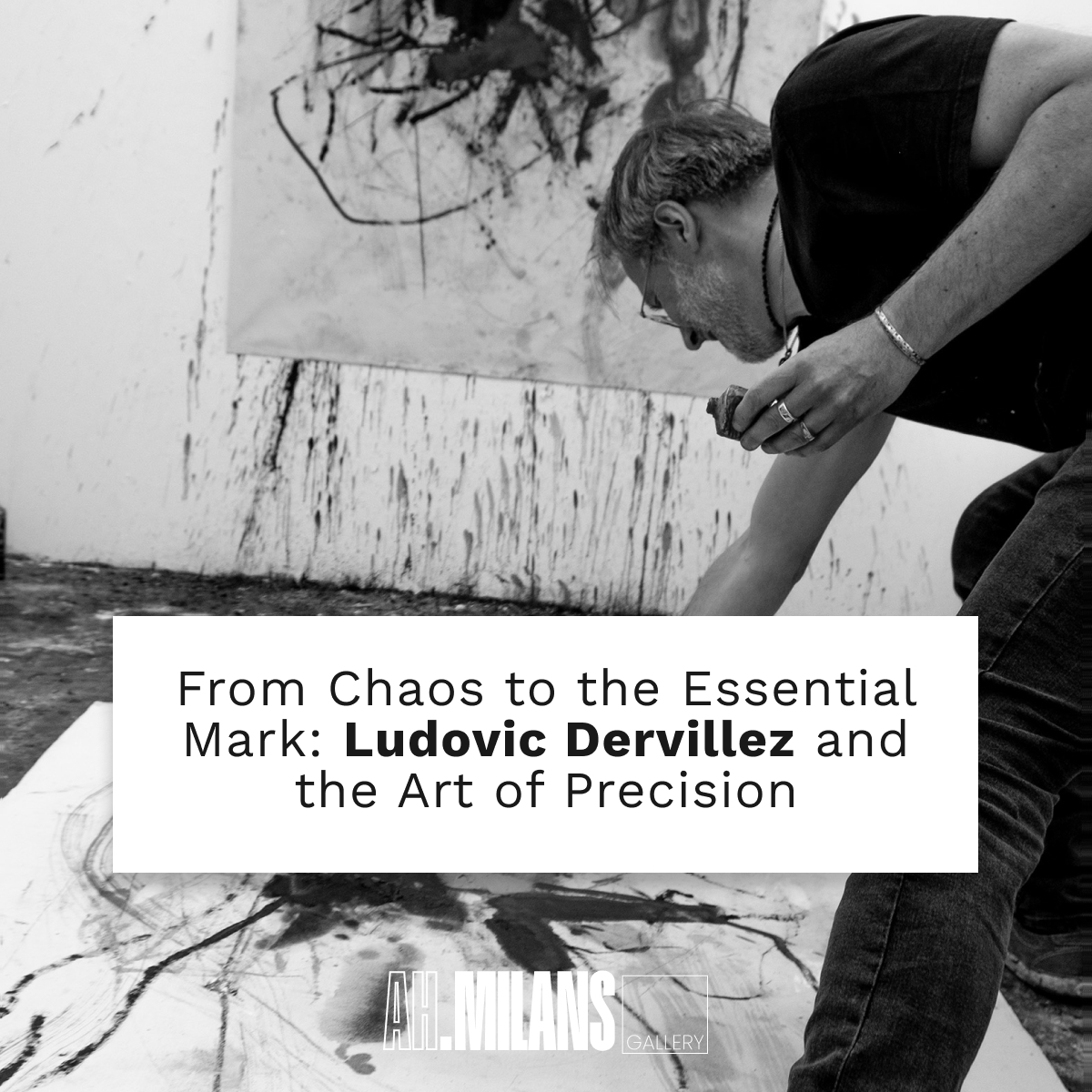
What if a painting wasn’t an image, but an unfinished sentence? In Ludovic Dervillez’s work, the canvas does not illustrate: it notes, scratches out, hesitates, and begins again. Through gestures that are both instinctive and sharply deliberate, his paintings become spaces of inscription—where every mark is a choice, and every silence a breath.
Sebastien Cheramy emerges as a singular voice in the contemporary art scene, his canvases a dance of color and form that challenge the viewer to move beyond the superficial and engage with the depth of emotion and the complexity of the human psyche.
Street art, once perceived as mere vandalism, has undergone a remarkable transformation. It's now celebrated as a powerful form of cultural expression and a valuable collectible art form.